
What happens after
Treatment pathway
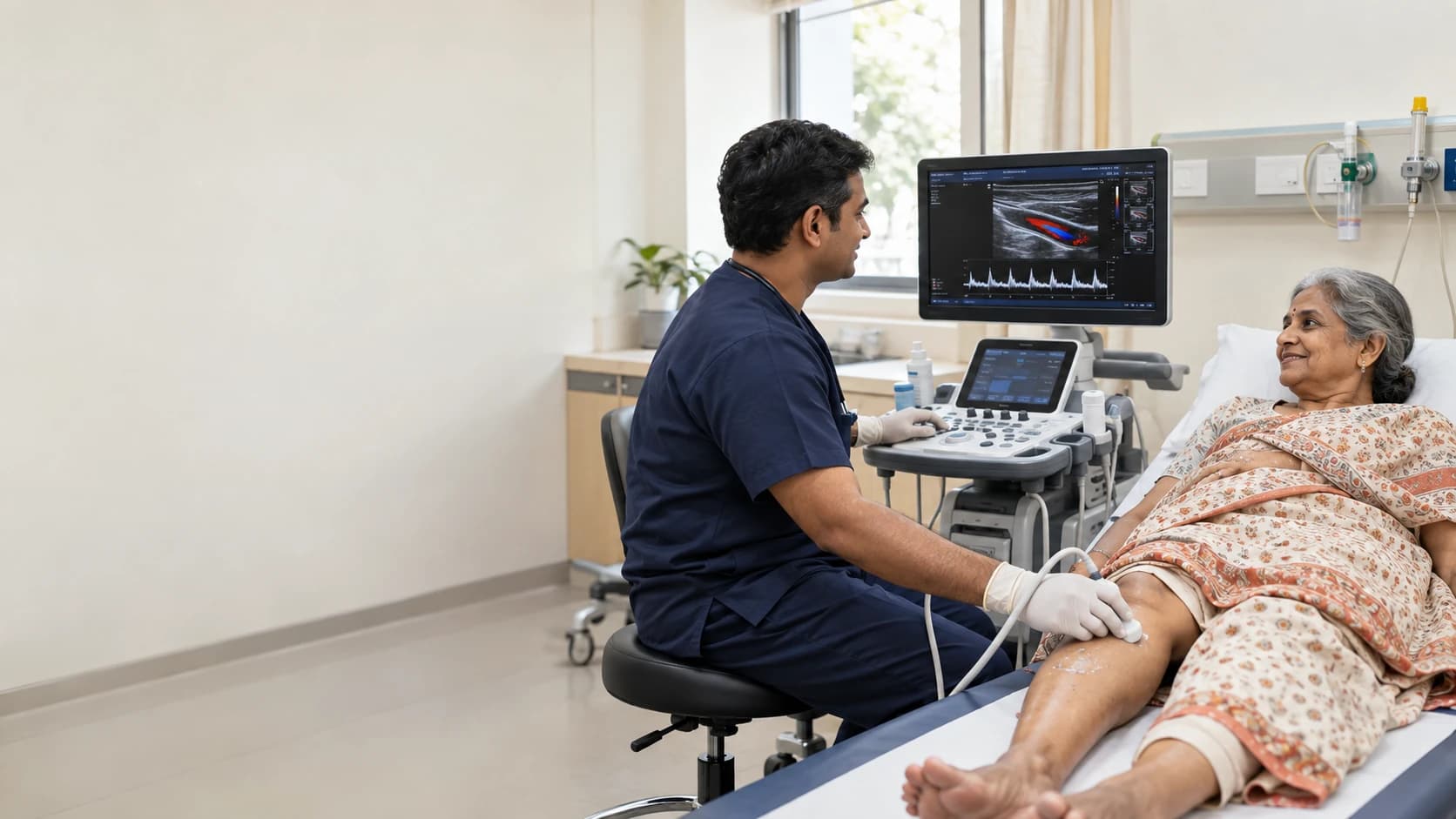
Arterial Doppler Scan
A non-invasive assessment that may help evaluate blood flow in the legs and feet.
A cold foot, skin-colour change, rest pain or a wound that is slow to heal may need prompt circulation assessment.
Treatment overview
Care is shaped around the person, the diagnosis and the goal.
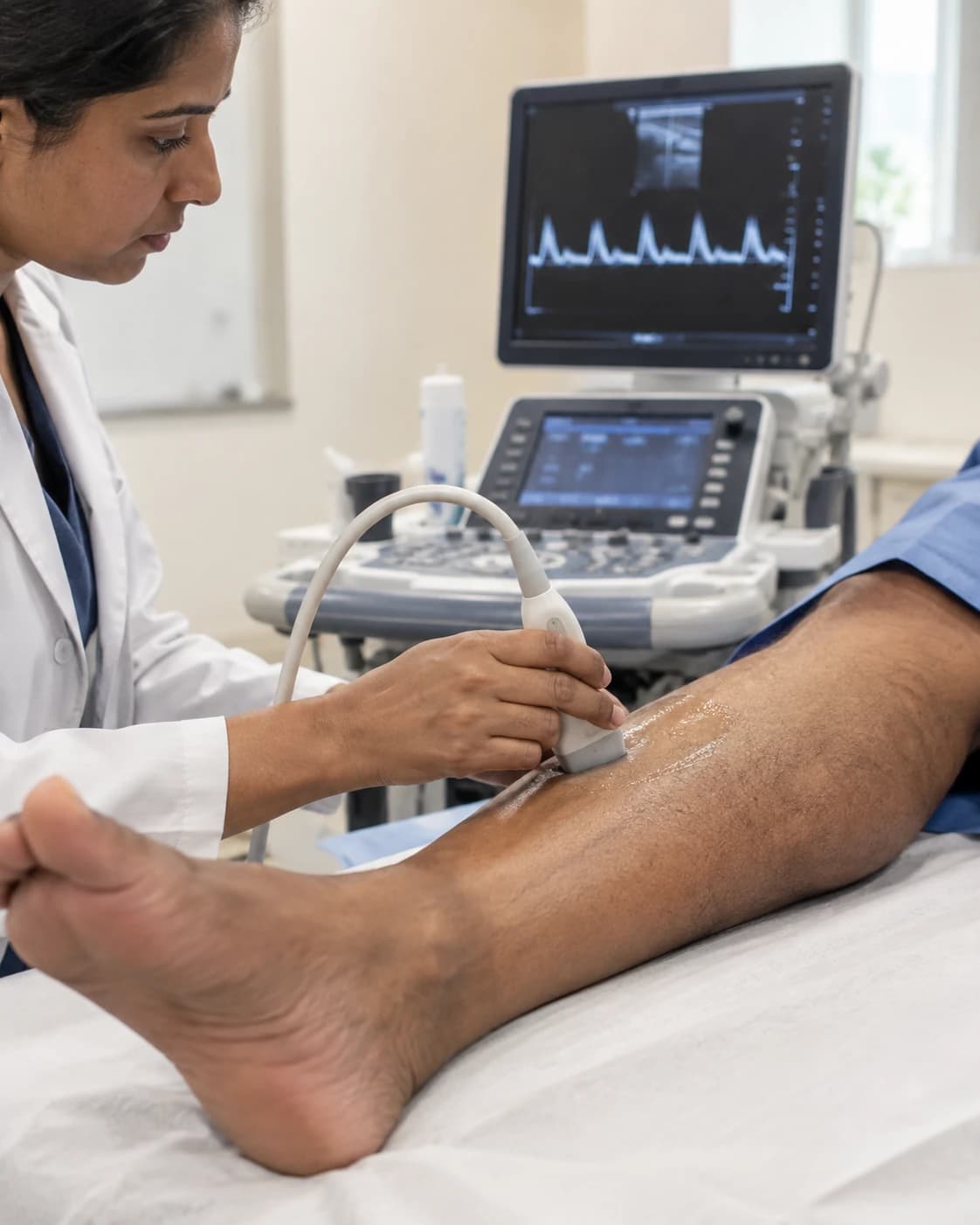
A non-invasive assessment that may help evaluate blood flow in the legs and feet. An arterial Doppler assessment uses sound-wave technology to help clinicians understand blood-flow patterns. It may be considered alongside pulse checks, wound assessment and relevant medical history.
Treatment context
Who may benefit
A clear assessment helps identify the right pathway.
A cold foot, skin-colour change, rest pain or a wound that is slow to heal may need prompt circulation assessment.
01What the scan can support
02What happens after
How the pathway works
Understand the care before it begins.
An arterial Doppler assessment uses sound-wave technology to help clinicians understand blood-flow patterns. It may be considered alongside pulse checks, wound assessment and relevant medical history.
What to expect
Treatment is reviewed as needs change.
Assess
Results are interpreted within the full clinical picture. Depending on findings, a clinician may advise treatment, monitoring or a vascular referral.
Plan
The clinician explains the next step in the context of your findings.
Provide care
The clinician explains the next step in the context of your findings.
Follow up
The clinician explains the next step in the context of your findings.
Treatment modules
Practical care, explained clearly.
What happens after: Results are interpreted within the full clinical picture. Depending on findings, a clinician may advise treatment, monitoring or a vascular referral.
Protect your feet between reviews.
Keep changes protected, avoid unadvised self-treatment and seek advice if symptoms worsen or do not improve.
The next step should be clear.
A timely assessment helps match care to the diagnosis, risk and practical needs of the person.
Common questions
When should I seek medical advice?+
A new wound, spreading redness, swelling, discharge, odour, colour change, or a hot, cold or painful foot should be assessed promptly. If you feel very unwell, seek urgent or emergency care.
How is the right pathway chosen?+
A clinician considers the diagnosis, symptoms, skin or wound, sensation, circulation, pressure, footwear, medical history and your goals before recommending next steps.
What should I bring to an appointment?+
Bring recent reports, a medication list, details or photographs of changes over time and your usual footwear when relevant.
Continue the care journey
The right next step depends on the clinical picture.
Explore the related pathways that may be discussed after assessment.

Make an appointment
Find the right next step for arterial doppler scan.
Our team can help you understand what needs assessment and what information to bring. Diagnosis and treatment depend on an in-person review.
Specialist assessmentClear next stepsIndividual care planning

Dr. A. Nirupan Chakkaravarthy
Consultant Podiatrist · Limb Salvage Specialist
This guide is for general education and does not replace an in-person assessment.