
Diabetic foot
When should a foot wound be assessed?
Any new open sore or break in the skin on a person with diabetes should be assessed promptly. Learn which changes need same-day or urgent attention.
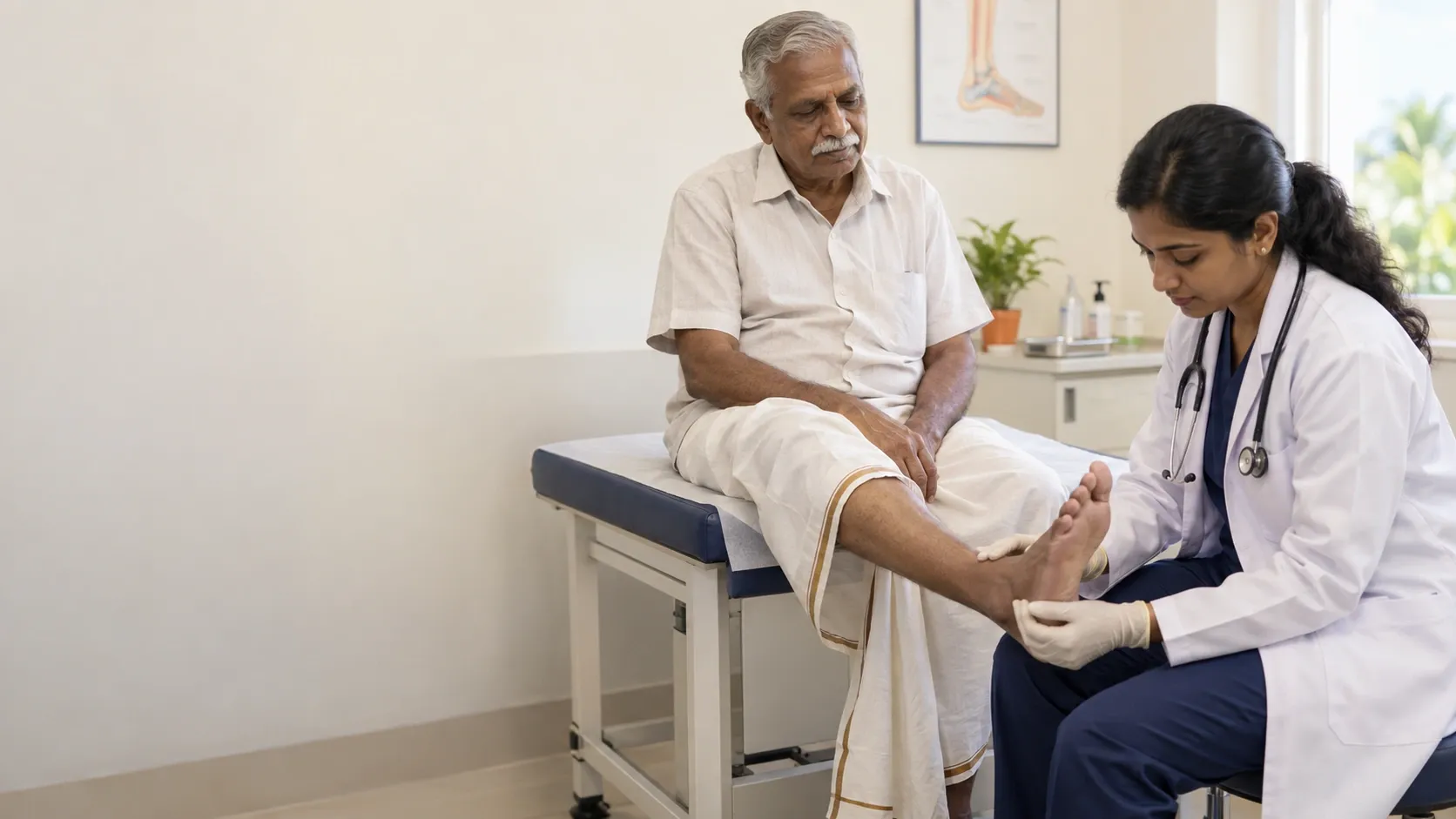
A new wound should not be watched at home for days
Any new open sore or break in the skin on a person with diabetes should be assessed promptly. Do not wait for it to worsen. This includes a blister that has opened, a cut, puncture, burn, cracked area or pressure-related sore. A wound may be painless when sensation is reduced, and poor circulation can make healing and infection control more difficult.
Prompt assessment allows a clinician to look at the wound and the surrounding skin, consider sensation and blood flow, check for pressure or footwear factors, and decide whether further tests or treatment are needed. The correct next step depends on the wound and the person’s overall health; an online description cannot determine that safely.
Changes that need prompt professional advice
Arrange prompt review if you notice:
- an open sore, blister or break in the skin
- redness, swelling, warmth, discharge or a new odour
- a wound that is enlarging or not beginning to improve
- bruising, bleeding, a new callus or a pressure mark
- a new change in foot shape, a hot swollen foot or difficulty walking
- new numbness, burning, weakness or loss of protective sensation
- a foot that looks paler, bluer or darker than usual
Do not use pain as the deciding factor. Neuropathy can reduce pain, temperature or pressure sensation, while a circulation problem can affect the skin without causing an obvious symptom at first.
Routine care is not the same as waiting
Routine prevention includes daily inspection, safe washing and drying, suitable footwear, diabetes care and planned professional checks. It does not mean observing an open wound for several days to see whether it closes. A clinician may advise a particular dressing, pressure-relief plan or review interval after examining the foot. Until then, avoid barefoot walking, soaking, home remedies and self-treatment of callus or damaged tissue.
If you are unsure whether a change is important, describe it when you call: where it is, when it appeared, whether it is spreading, whether the foot is warmer or colder than the other side, and whether there is drainage or a change in general health. Bring your medication list and any existing wound-care instructions. Clear information helps triage, but the decision about urgency still requires clinical judgement.
When the situation may be urgent
Seek urgent medical help if there is fever, chills, confusion, marked weakness or another sign of systemic illness; rapidly spreading redness or swelling; severe or rapidly increasing pain; black or dusky tissue; a cold or suddenly pale foot; heavy bleeding; exposed bone or tendon; or concern that infection is deep or spreading. Gangrene, a suspected severe infection, or a wound with suspected limb ischaemia should not wait for a routine appointment.
What to do while arranging care
Keep the area clean and protected with a light, clean dressing if advised. Avoid soaking the foot, walking barefoot, applying home remedies or antiseptics not recommended for the wound, and cutting away tissue or callus yourself. Reduce pressure on the area and follow any existing offloading or dressing plan from your clinical team. Do not start leftover antibiotics or share medication; antibiotic choice and duration depend on clinical assessment.
If you have a photograph, note when the change was first noticed and whether it is spreading. Bring your medicines, diabetes information and footwear to the appointment if possible. These details can help the team understand what has changed, but they do not replace an examination.
If you already have a wound-care plan, follow the instructions given for that wound and contact the team if the plan no longer seems suitable. A dressing that was appropriate for one stage may not be appropriate after the wound changes. Keep the foot protected and avoid pressure, but do not improvise with adhesive products, tight bandages or unprescribed medicines.
Takeaway
Early advice is appropriate for any new wound. Urgent help is needed when infection, reduced blood flow, gangrene or systemic illness may be present. Prompt assessment is safer than waiting to see whether a diabetic foot wound settles on its own.
This article is for general education and is not medical advice. Individual concerns require appropriate clinical assessment.
Related clinical content