
Diabetic foot
Diabetic Foot Ulcers: Warning Signs You Should Not Ignore
A diabetic foot ulcer may begin with a small break in the skin, blister or pressure mark. Learn which changes need prompt assessment, even when there is little pain.
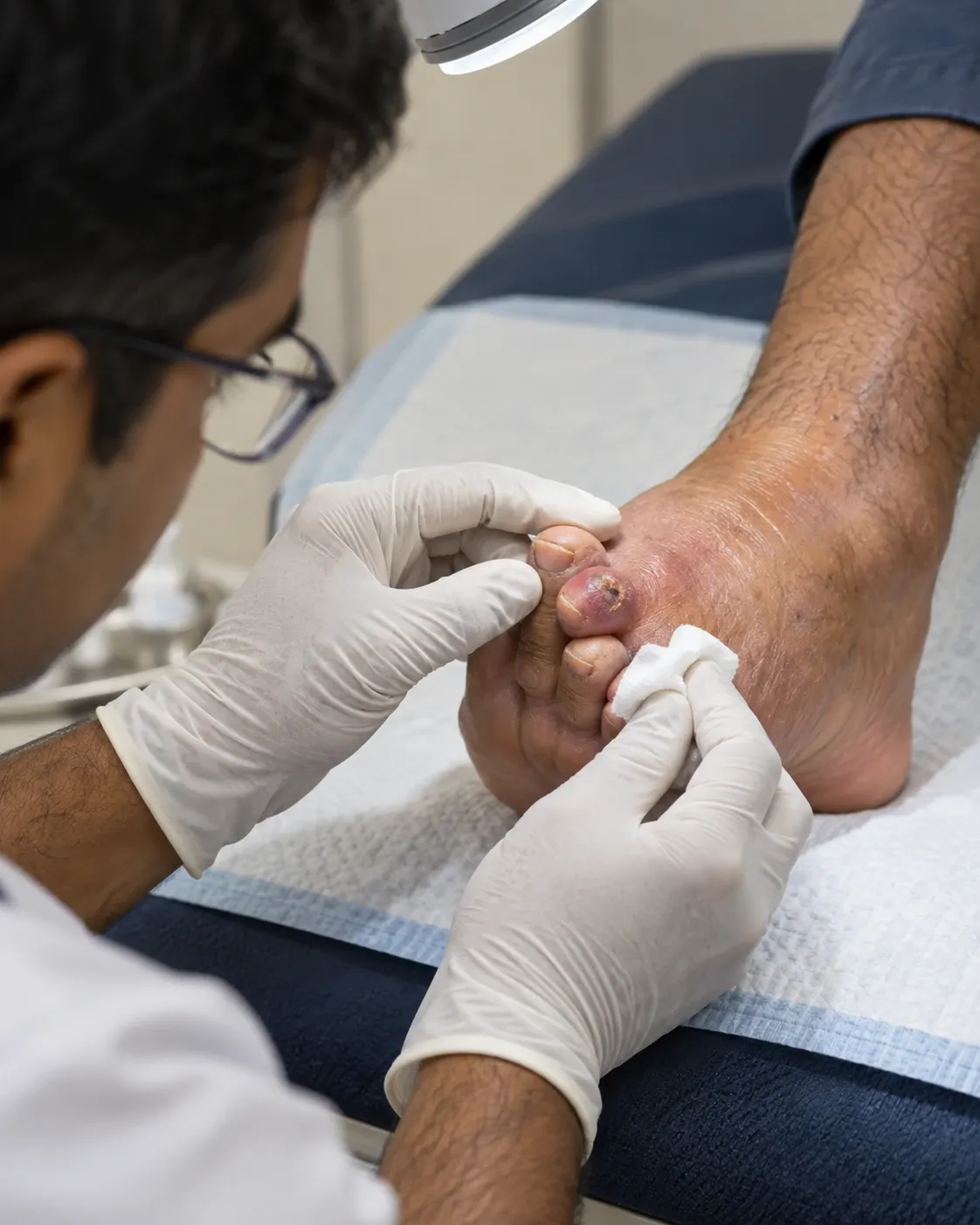
What is a diabetic foot ulcer?
A diabetic foot ulcer is an open break in the skin of the foot in a person with diabetes. It often develops where repeated pressure, friction, a callus, an injury or a change in foot shape has damaged the skin. Neuropathy can reduce the ability to feel pain, while peripheral arterial disease can reduce blood supply. These factors can occur together and can make a wound harder to recognise or heal.
Early signs
The first sign may not look like a large wound. Look for a blister, crack, graze, puncture mark, bleeding under a callus, or a patch of skin that is persistently red after removing footwear. A new dark mark, swelling, warmth, dampness, discharge or change in the way a shoe fits may also indicate pressure or tissue injury.
- an open sore or break in the skin
- redness that does not settle after pressure is removed
- swelling, warmth or a change in colour
- fluid, blood, pus or a new odour
- thickened callus over a high-pressure area
- a wound that is enlarging, deeper or exposing deeper tissue
- a new change in foot shape or difficulty bearing weight
Pain may be absent. Reduced sensation can allow repeated walking on an injury, so a painless wound still needs professional attention.
Signs of possible infection
Infection may cause spreading redness, increasing warmth or swelling, tenderness, discharge, odour or a wound that is becoming more painful. Some people with diabetes may have muted symptoms, and a normal temperature does not rule out a foot infection. Feeling feverish, shivering, confused, very weak or generally unwell can suggest a more serious infection and needs urgent medical help.
What assessment may involve
A clinician may inspect the wound, measure its size and depth, assess sensation and pressure, and check the foot’s circulation. Depending on the findings, imaging, blood tests, a deep wound sample or review by a multidisciplinary foot team may be appropriate. Treatment is individualised and may involve wound care, pressure reduction, infection management, circulation assessment or other specialist input.
Do not assume that a dressing alone is enough. The cause of pressure, infection, poor blood flow or repeated trauma also needs attention. Do not cut callus, probe the wound, use strong antiseptics, apply unprescribed products or start leftover antibiotics at home.
Why the surrounding foot matters
The skin opening is only one part of the assessment. A clinician may need to understand how the wound started, whether there is a callus or deformity, how pressure is distributed during walking, whether sensation is reduced and whether the blood supply is adequate. A wound can also be affected by swelling, kidney disease, nutrition, smoking, blood glucose management and the person’s ability to keep a dressing or device in place. These factors do not let a reader diagnose themselves, but they explain why two wounds that look similar may need different plans.
Do not remove a scab or dead tissue, insert an object into the wound, or use a strong chemical because it appears to be infected. The team may need a careful examination, a sample or imaging before deciding on treatment. Follow-up matters because the appearance of an ulcer can change even when the person feels well.
People with diabetes may also have a hot, swollen foot or a change in foot shape without an obvious wound. This can need urgent assessment, particularly when neuropathy is present. Do not assume it is only a sprain or continue normal activity until a clinician has advised you. Early examination can help identify whether pressure, infection, bone or circulation needs attention.
When to seek urgent help
Seek urgent medical care for gangrene or black tissue, rapidly spreading redness, severe or disproportionate pain, a cold or suddenly pale foot, fever or systemic illness, suspected deep infection, exposed bone or tendon, or a wound with suspected poor circulation. For every other new ulcer or open sore, arrange prompt professional assessment rather than waiting for it to close by itself.
Takeaway
The earlier a foot ulcer is recognised, the sooner the team can look for pressure, infection, neuropathy and circulation problems. A small or painless wound is still clinically important. If the skin is open, ask for an assessment.
This article is for general education and is not medical advice. Individual concerns require appropriate clinical assessment.
Related clinical content