
Preventive foot care
Why a daily foot check matters
A short daily check can help people living with diabetes notice changes in the skin, nails, shape or temperature of the foot before a small problem becomes harder to manage.
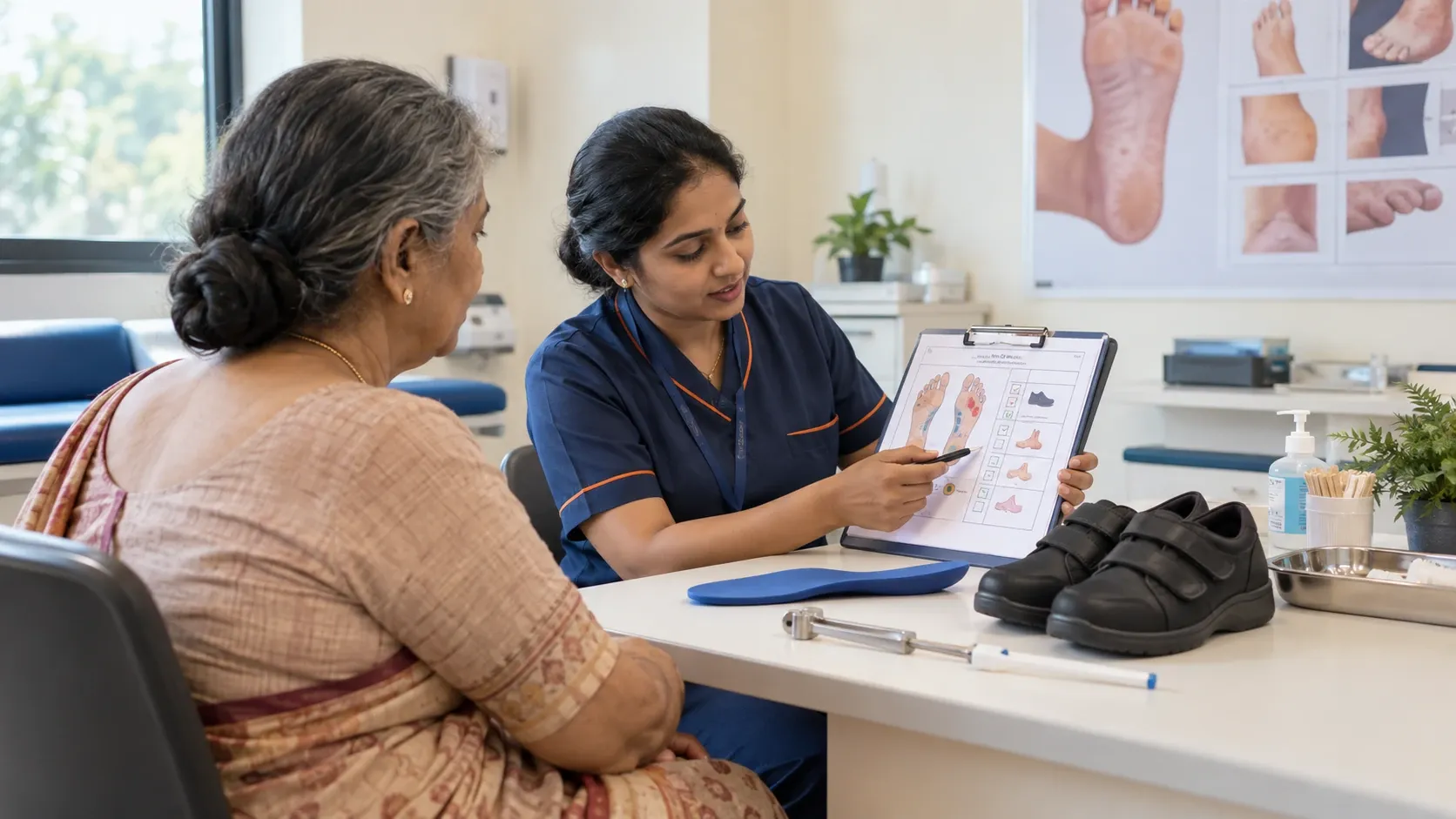
Introduction
People living with diabetes are encouraged to look at their feet every day, even when their feet feel normal. Changes in sensation, blood flow, skin condition or foot shape can make an injury easier to miss. A daily check is not a diagnosis and it cannot replace a scheduled foot examination, but it can help you notice a problem early enough to ask for advice.
What to look for
Choose a regular time, such as after washing and drying your feet. Look at both feet, including the soles, heels, between the toes and around the nails. Use a mirror, phone camera or a family member’s help if you cannot see or reach the underside safely.
- cuts, cracks, blisters, grazes or an open sore
- redness, swelling, warmth, bruising or a change in colour
- dry, peeling or broken skin, especially around the heel
- fluid, blood, odour or discharge from a wound
- a new callus, corn, pressure mark or area rubbed by footwear
- a change in the shape of the foot or toes
- a nail that is inflamed, damaged or growing into the surrounding skin
Compare one foot with the other. A new difference can be useful information for your healthcare team, even when it is not painful.
A simple routine
Wash your feet with warm, not hot, water and dry them carefully, including between the toes. If the skin is dry, a plain moisturiser may be applied to the top and bottom of the foot, but it should not usually be placed between the toes unless a clinician advises it. Check the inside of shoes before putting them on and avoid walking barefoot, including indoors, if your feet have reduced sensation or another diabetes-related risk.
Do not cut corns or calluses yourself, use corn plasters, apply strong chemicals or put an unassessed foot problem under a tight dressing. Toenail care should follow the advice given by your diabetes or foot-care team. People who cannot see their feet, have reduced feeling, a previous ulcer, poor circulation or a changed foot shape may need help with checks and more frequent professional reviews.
When to ask for help
Contact a healthcare professional promptly about any new break in the skin, blister, redness, swelling, warmth, discharge, colour change or foot pain. Do not wait for an injury to become painful; neuropathy may reduce the warning sensation. Seek urgent medical help for a rapidly worsening problem, black or dusky tissue, spreading redness, fever, feeling very unwell, severe pain, a cold or pale foot, or a wound with suspected poor blood flow.
Making the check practical
The check does not need to be complicated. A bright room, a mirror and a few minutes are usually enough. If a family member helps, ask them to look for changes rather than trying to diagnose the cause. A simple note or photograph can help you remember when a mark first appeared and whether it is changing, but photographs should not replace an examination when the skin is open or the foot is changing.
Daily checking is particularly important after a change in footwear, increased walking, travel, illness, a fall or any activity that places more pressure on the feet. People with previous ulcers, neuropathy, circulation problems, kidney disease or a changed foot shape may need a personalised checking and review plan. Ask the diabetes or foot-care team how often you should be seen; a generic annual check may not be enough for everyone.
The other foot deserves the same attention. A person may unconsciously protect one foot and overload the other, or a problem with one side may change walking and create pressure elsewhere. Tell the team about changes in balance, walking pattern or footwear comfort as well as visible skin changes.
Takeaway
A daily check is a small protective habit. It works best alongside diabetes care, appropriate footwear and scheduled foot assessments. If something looks different, stop guessing and ask for an individual assessment.
This article is for general education and is not medical advice. Individual concerns require appropriate clinical assessment.
Related clinical content