
Case study · Infected non-healing diabetic foot ulcer
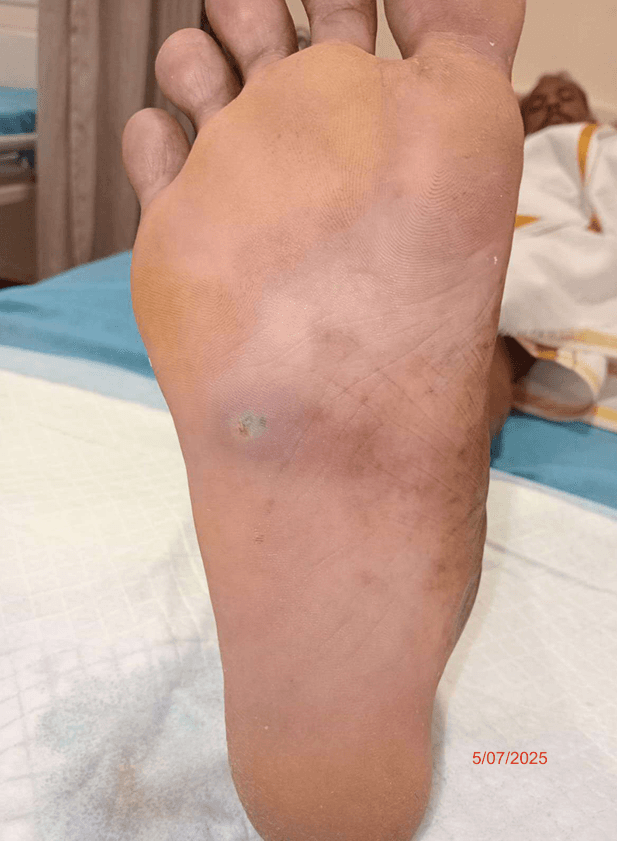
Thorn-prick injury: when minor trauma becomes a diabetic foot emergency
A right-foot wound after a thorn-prick injury that progressed to an infected non-healing ulcer in a patient with diabetes, hypertension and chronic kidney disease.
01
Presentation
02
Clinical care
03
Follow-up
Clinical context
Presentation and assessment.
50-year-old male. The record notes HbA1c above 13.5% and the importance of treating even seemingly small injuries promptly.
Care pathway documented in this case
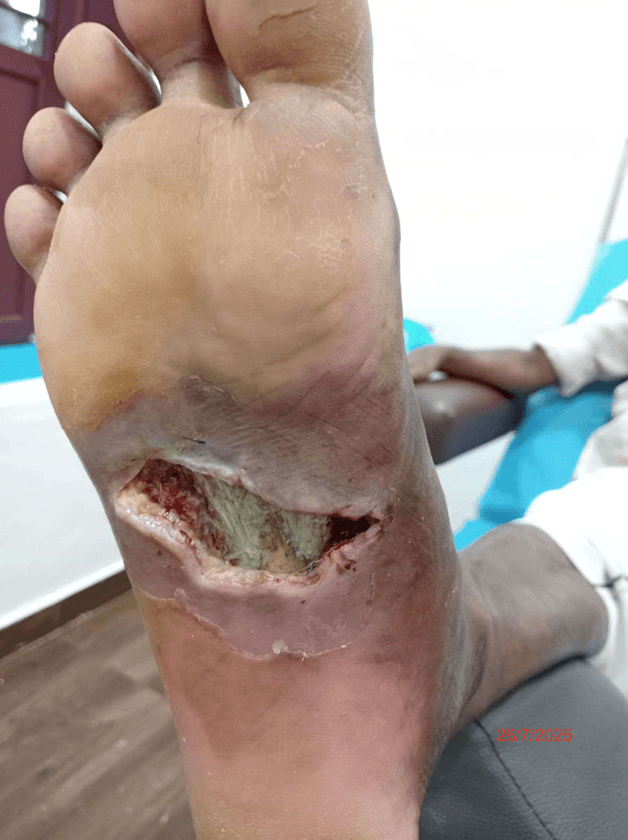
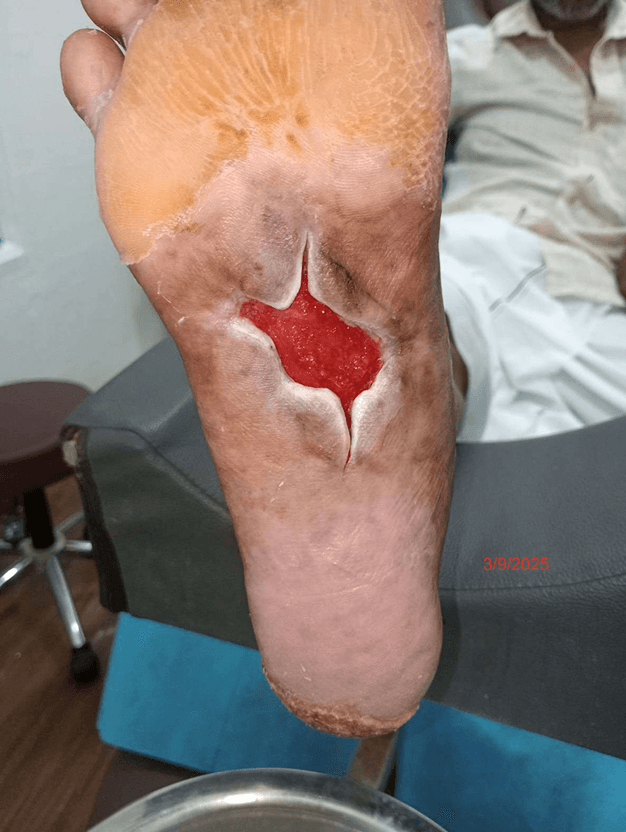
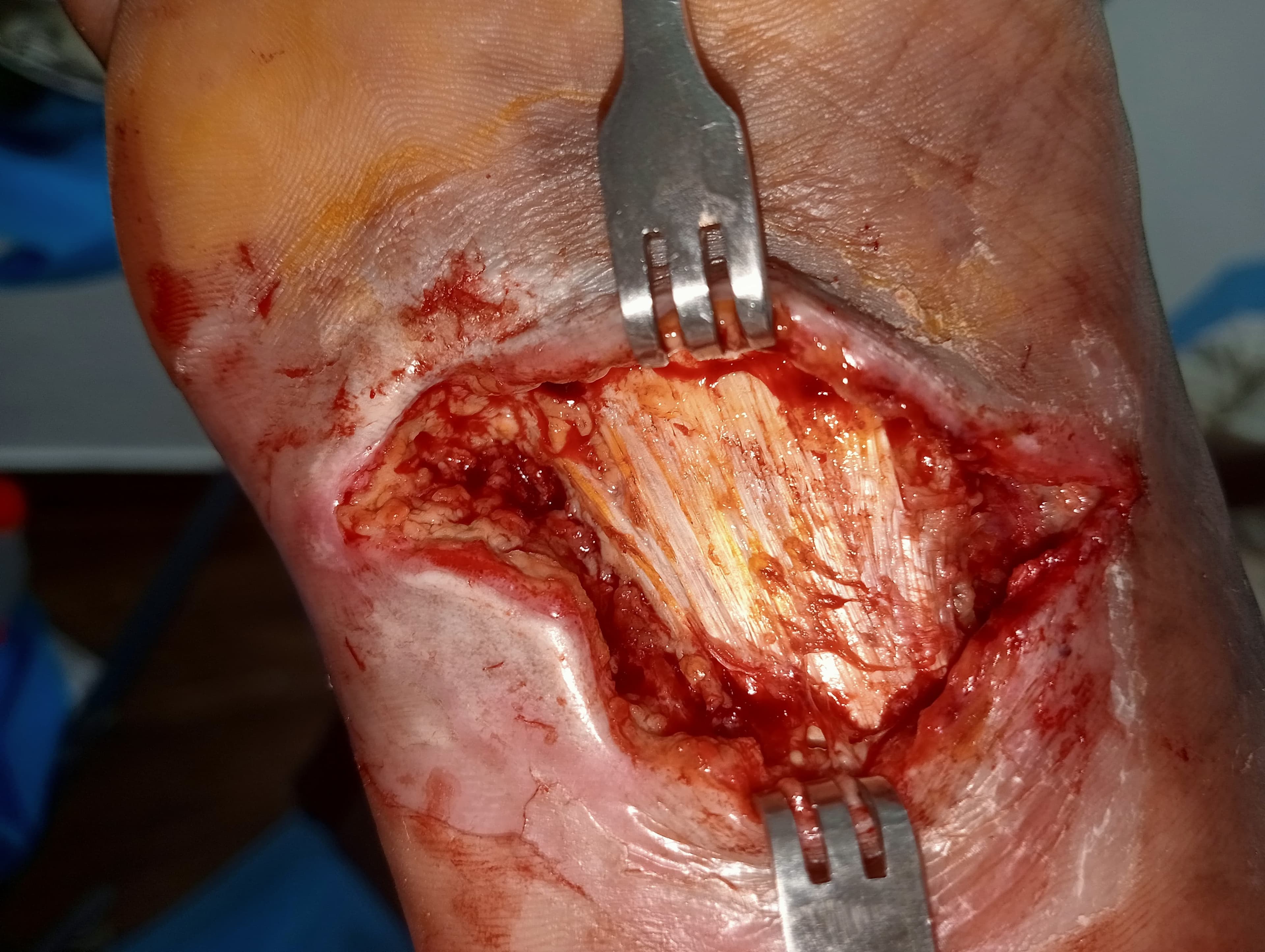
- Extensive surgical wound debridement
- Infection control and wound-bed optimisation
- Diabetic foot care with glycaemic management
Outcome & follow-up
Progress is recorded with context.
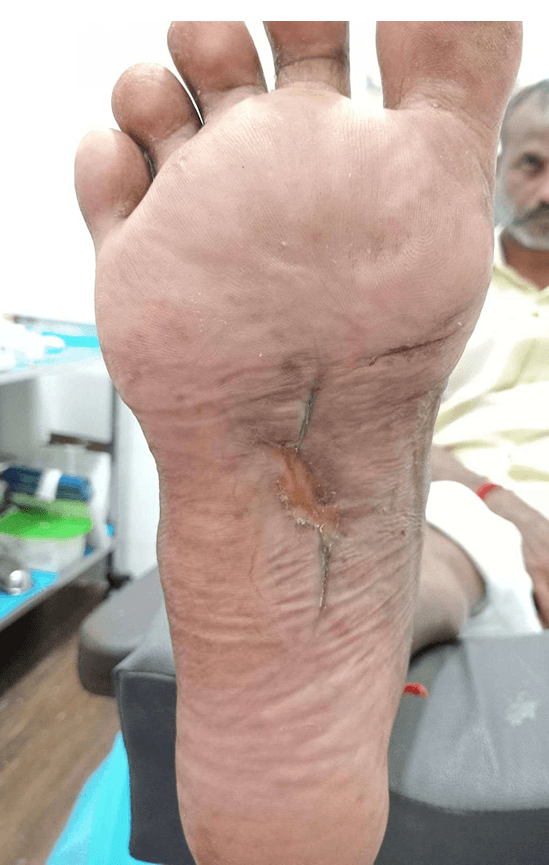
The presentation documents complete wound healing in 32 days, infection control and limb preservation.
This is a consent-led clinical record. Individual treatment pathways and outcomes vary for every patient.
A qualified clinician must assess an individual wound, circulation, sensation and infection risk before recommending care.
Clinical image record
The documented care journey.
Images are shown as part of the clinical record and should be viewed with respect for patient privacy and context.
A considered next step
Every case needs its own assessment and plan.
This record illustrates one patient journey. Speak with the MMC team to understand what assessment and care may be appropriate for your situation.